Why Mangos Are Helping Shape the Future of Culinary Education
By keywords
A Broader Conversation About Learning Through Food
Food has always connected people across generations, cultures, and communities. Increasingly, it is also becoming a meaningful way to teach children practical life skills that extend well beyond the kitchen. That growing interest is reflected in recent national coverage from Bon Appétit, which explored how mangos are introducing young people to cooking, nutrition, and global food traditions through its feature, From Pit to Plate: How Mangos Are Teaching a New Generation to Cook.
Among the organizations contributing to that conversation was Young Chefs Academy through its partnership with the National Mango Board. While the article focuses on mangos as a versatile teaching ingredient, it also reflects a broader shift in how families, educators, and culinary professionals view food education.
Rather than treating cooking as a household chore, many now recognize it as an opportunity to encourage curiosity, creativity, and confidence in children.
Looking Beyond the Headlines
The feature highlights a simple but meaningful idea: familiar ingredients can become powerful teaching tools when children are invited to explore them through hands-on learning.
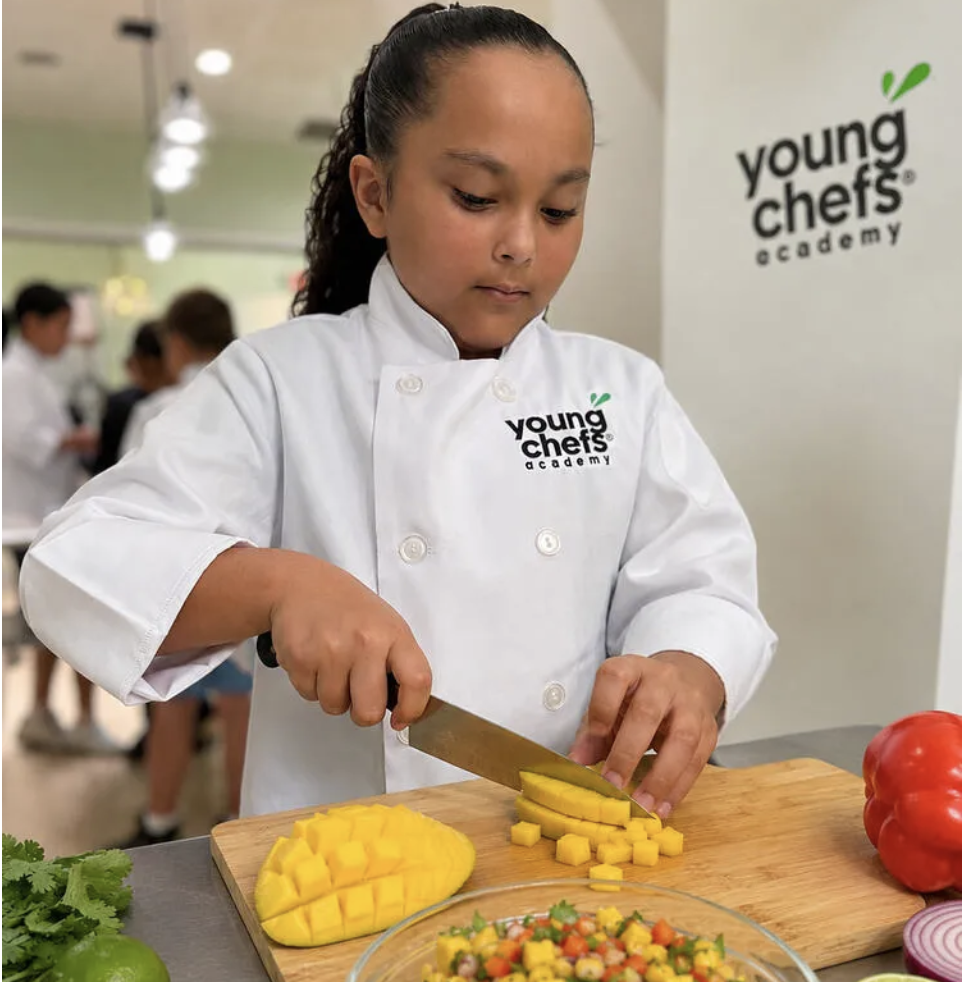
A mango offers much more than flavor. It introduces new textures, colors, aromas, and cultural traditions. Preparing one requires observation, fine motor skills, and careful technique. Those experiences naturally encourage children to ask questions, solve problems, and build confidence through practice.
That perspective reflects a larger conversation taking place across children’s education. Parents are increasingly seeking enrichment opportunities that combine creativity with practical learning. Cooking provides a setting where children can measure, experiment, communicate, and make decisions while producing something they can proudly share with others.
Why This Conversation Matters for Families
For many families, cooking together has become more than preparing dinner. It has become a chance to slow down, spend time together, and develop skills that children will carry into adulthood.
Children who participate in cooking classes for kids often become more willing to try unfamiliar ingredients because they helped prepare them. That ownership can reduce hesitation around healthy eating while encouraging curiosity about foods from different cultures.
Kitchen experiences also foster independence. Measuring ingredients strengthens math skills. Following recipes reinforces reading comprehension and sequencing. Adjusting techniques teaches flexibility when things do not go exactly as planned.
Equally important are the social and emotional benefits. Completing a recipe gives children a tangible sense of accomplishment. Small successes build confidence that often carries into classrooms, extracurricular activities, and everyday challenges.
For families searching for meaningful activities that combine education with creativity, culinary education offers a practical and engaging option.
How Young Chefs Academy Fits Into the Bigger Picture
The discussion reflected in the Bon Appétit feature aligns naturally with the educational philosophy that has guided Young Chefs Academy for many years.
Hands-on culinary education encourages children to engage all of their senses while learning. They observe changes in ingredients, explore scientific concepts through cooking techniques, strengthen mathematical thinking through measurements, and express creativity through presentation and flavor combinations.
These experiences also connect with broader STEAM education goals by blending science, technology, engineering, art, and mathematics into activities that feel both approachable and enjoyable.
The partnership with the National Mango Board illustrates how a single ingredient can become the foundation for conversations about nutrition, agriculture, geography, sustainability, and culture. Lessons like these help children understand that food tells stories extending far beyond a recipe.
Kitchen confidence grows gradually through repeated opportunities to explore, practice, and create. That process encourages children to become active learners who feel comfortable trying new ideas both inside and outside the kitchen.
A Growing Interest in Culinary Education
Across children’s education, experiential learning continues to gain momentum.
Families increasingly value enrichment experiences that balance academic development with practical life skills. Cooking camps, children’s cooking classes, and hands-on culinary programs answer that need by providing opportunities to build confidence while developing everyday independence.
Nutrition education has also taken on greater importance as families look for ways to encourage healthy habits from an early age. Introducing children to fresh ingredients through cooking often creates positive experiences that last well beyond childhood.
At the same time, exposure to foods from different cultures helps children appreciate traditions beyond their own communities. These experiences encourage openness, curiosity, and respect for the diverse ways people gather around food.
The growing attention from national publications reflects this changing landscape. Cooking is increasingly recognized not simply as a hobby but as an educational experience that supports lifelong learning.
Closing Thoughts
The Bon Appétit feature begins with mangos, but its larger message reaches much further.
Food has the ability to teach curiosity, resilience, collaboration, and creativity in ways that feel natural and memorable. Each recipe offers opportunities to practice communication, develop practical life skills, and gain confidence through experience.
That broader conversation continues to shape how families think about childhood learning. It also reflects why organizations like Young Chefs Academy remain an important part of today’s educational landscape. By combining culinary education with hands-on learning, children gain more than kitchen techniques. They develop confidence, curiosity, healthy habits, and practical skills that can support them throughout their lives.