Where the Kitchen Becomes a Classroom: How Young Chefs Academy is redefining youth enrichment through the powerful intersection of culinary education and STEM learning
By keywords
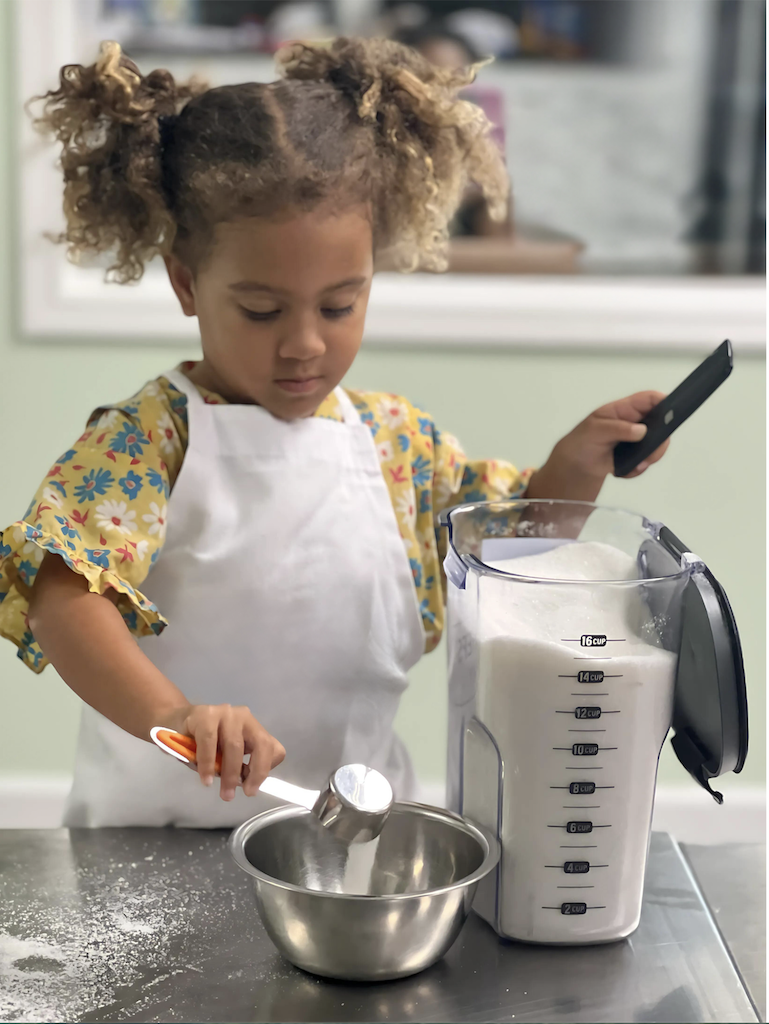
The youth enrichment franchise market is more competitive — and more promising — than ever. Parents are searching for programs that go beyond passive entertainment, seeking out experiences that build the skills their children will genuinely need. In this landscape, Young Chefs Academy stands apart: a franchise model that marries the universal appeal of cooking with a rigorous commitment to STEM learning, and at its core, the belief that every child is capable of real mathematical thinking.
That’s not a marketing slogan. It’s a pedagogical conviction — and it’s driving meaningful results for franchise owners and students alike.
Math Is at the Center of Everything
High-quality math education equips students with critical skills such as logical reasoning, problem-solving, and analytical thinking. These skills extend far beyond the classroom, shaping how individuals make decisions, evaluate information, and approach challenges in everyday life.
In a world increasingly driven by data and technology, math provides young people with the knowledge they need to succeed in fields such as science, engineering, medicine, economics, and technology. Most importantly, learning mathematics builds confidence. As students work through complex problems and discover solutions, they develop perseverance, resilience, and self-worth.
“At Young Chefs Academy, we believe that every person is a math person. It’s our job to help our students understand, live, and practice that truth.”
This belief system is the engine of the Young Chefs Academy franchise. It’s not a supplemental feature — it’s the foundation on which every class, workshop, and lesson plan is built. And for franchise investors, it represents something rare: a program with a genuine educational identity that parents can trust, and that students genuinely love.
A Curriculum Designed for Deep Learning
Young Chefs Academy’s class programs are structured by units, lessons, and sessions — all divided into parts that allow students the time necessary to dig deeper into concepts and become independent learners. This isn’t a one-size-fits-all approach; it’s a layered system designed to meet students where they are and move them forward.
Each session follows the Try–Discuss–Connect model: a predictable routine that gives students an opportunity to make sense of problems, share ideas with their peers, and compare different mathematical representations and approaches. The result is a classroom dynamic that feels collaborative rather than competitive, exploratory rather than prescriptive.
🧪
Try
Students engage directly with problems, building intuition before instruction.
💬
Discuss
Peer exchange deepens understanding and surfaces diverse approaches.
🔗
Connect
Students link new thinking to existing knowledge, cementing lasting learning.
For franchise owners, this curriculum structure is a significant operational advantage. It’s teachable, repeatable, and quality-controlled — meaning the experience a student has in one Young Chefs Academy location is consistent with what they’d find in another, anywhere in the country.
Building Thinking Classrooms: The Next Evolution
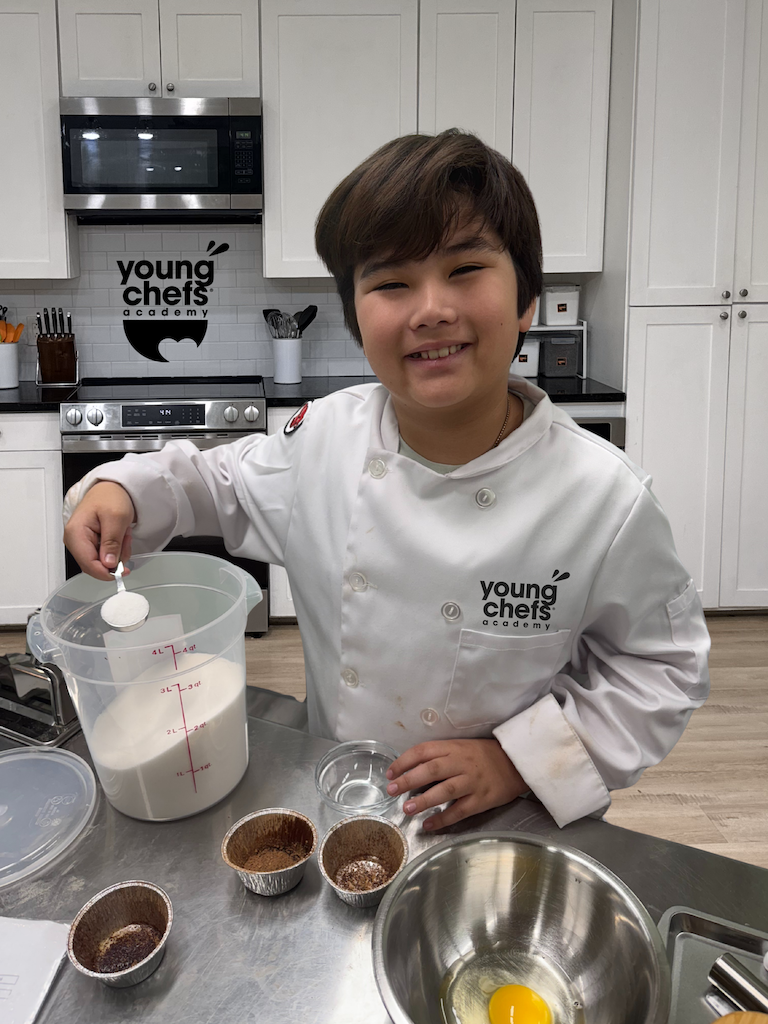
Young Chefs Academy instructors are increasingly incorporating the Building Thinking Classrooms (BTC) model into their classes. Developed by educator and researcher Peter Liljedahl, BTC reimagines classroom practice by shifting the focus from teacher demonstration and student mimicry to one of student-centered mathematical thinking.
In a typical BTC lesson, students work in small groups of two to four to solve problems and tasks. This model allows students to revise, refine, and build on ideas as their understanding evolves. Teachers are tasked with actively monitoring student thinking, asking purposeful and probing questions, and using observations to guide next steps.
EARLY RESULTS
There is no requirement for teachers to adopt the BTC model, but many schools and teachers have opted into BTC professional learning and classroom implementation — and early qualitative evidence is very promising.
Participating schools and teachers are seeing a noticeable increase in student discourse, engagement, and collaboration. These are the outcomes that define a premium enrichment program — and that drive word-of-mouth growth for franchise owners.
Why This Model Wins in the Market
The youth enrichment space is full of programs offering enrichment in name only. What sets Young Chefs Academy apart — and what makes it a compelling franchise investment — is the substance behind the brand. Here is a program rooted in evidence-based pedagogy, aligned with the skills today’s parents most want their children to develop, and delivered through an experience — cooking — that children actually look forward to.
STEM learning embedded in a culinary context isn’t a gimmick. Measurement is mathematics. Recipe scaling is proportional reasoning. Understanding why bread rises is chemistry. The kitchen is, quite literally, a laboratory — and Young Chefs Academy has built a curriculum that treats it as one.

For prospective franchisees, the value proposition is clear: a brand with genuine educational credibility, a curriculum that produces measurable outcomes, and a market position at the intersection of two of the most durable trends in consumer spending — experiential enrichment for children and STEM education. That’s not a trend. That’s a foundation.